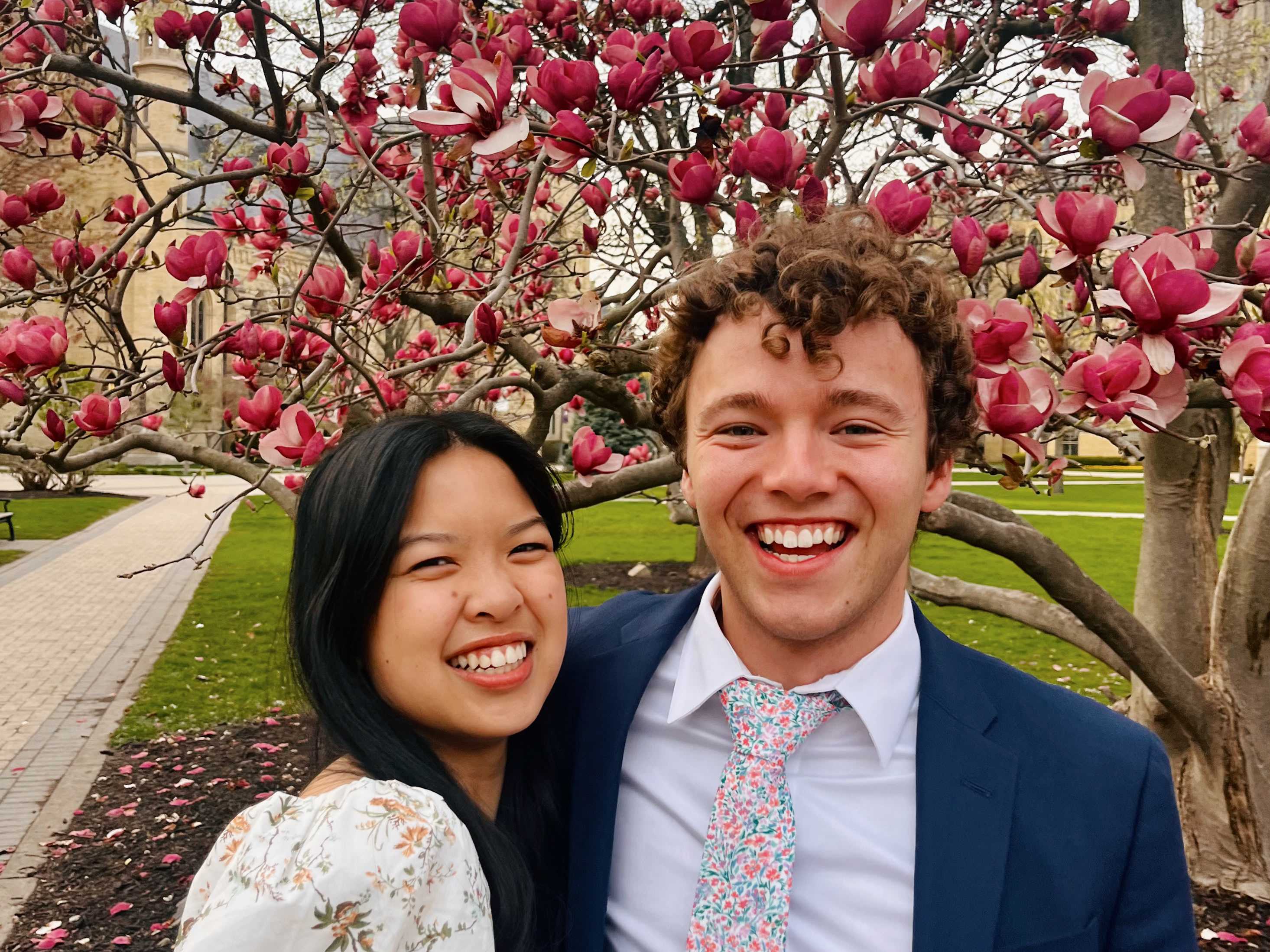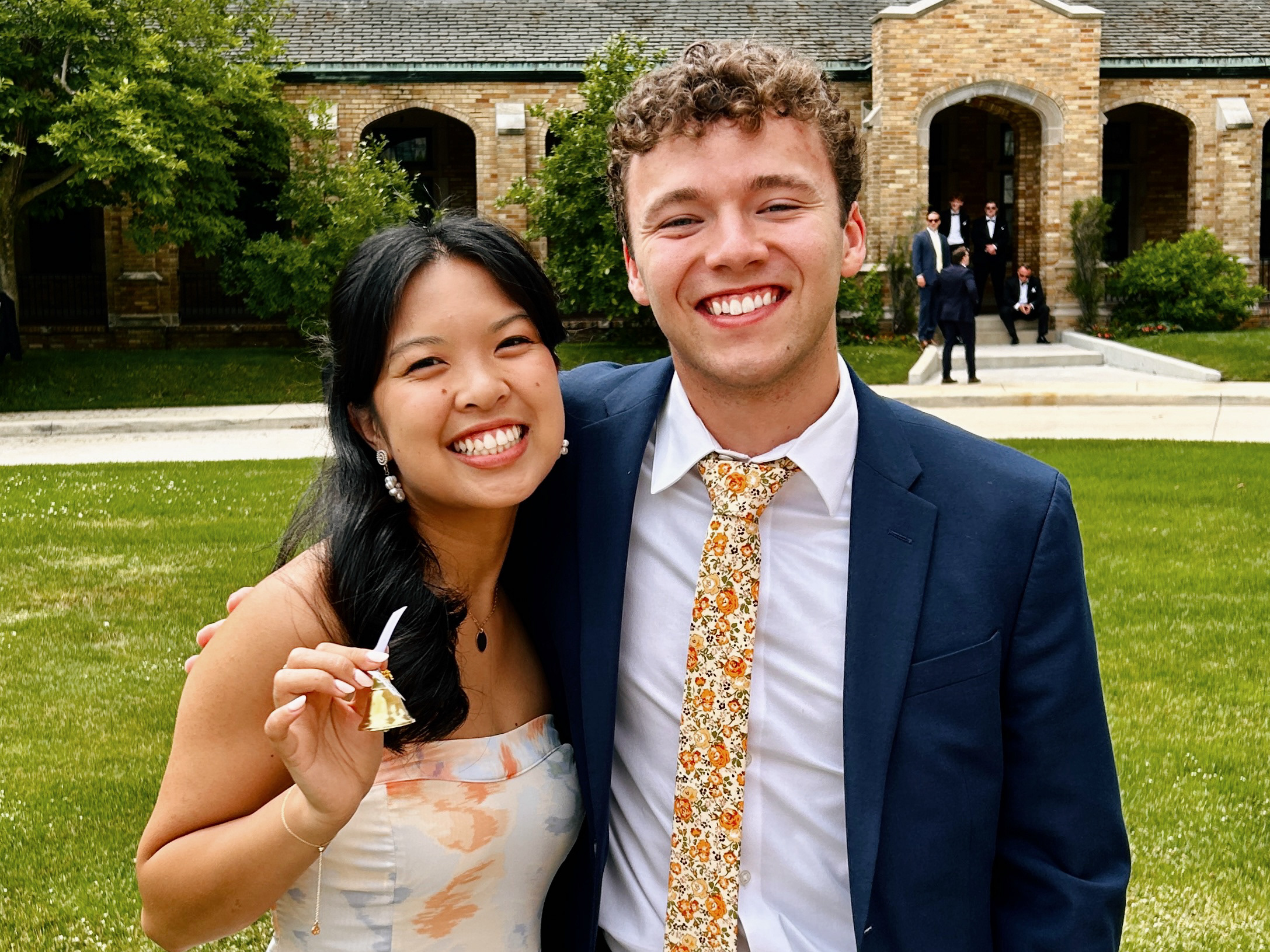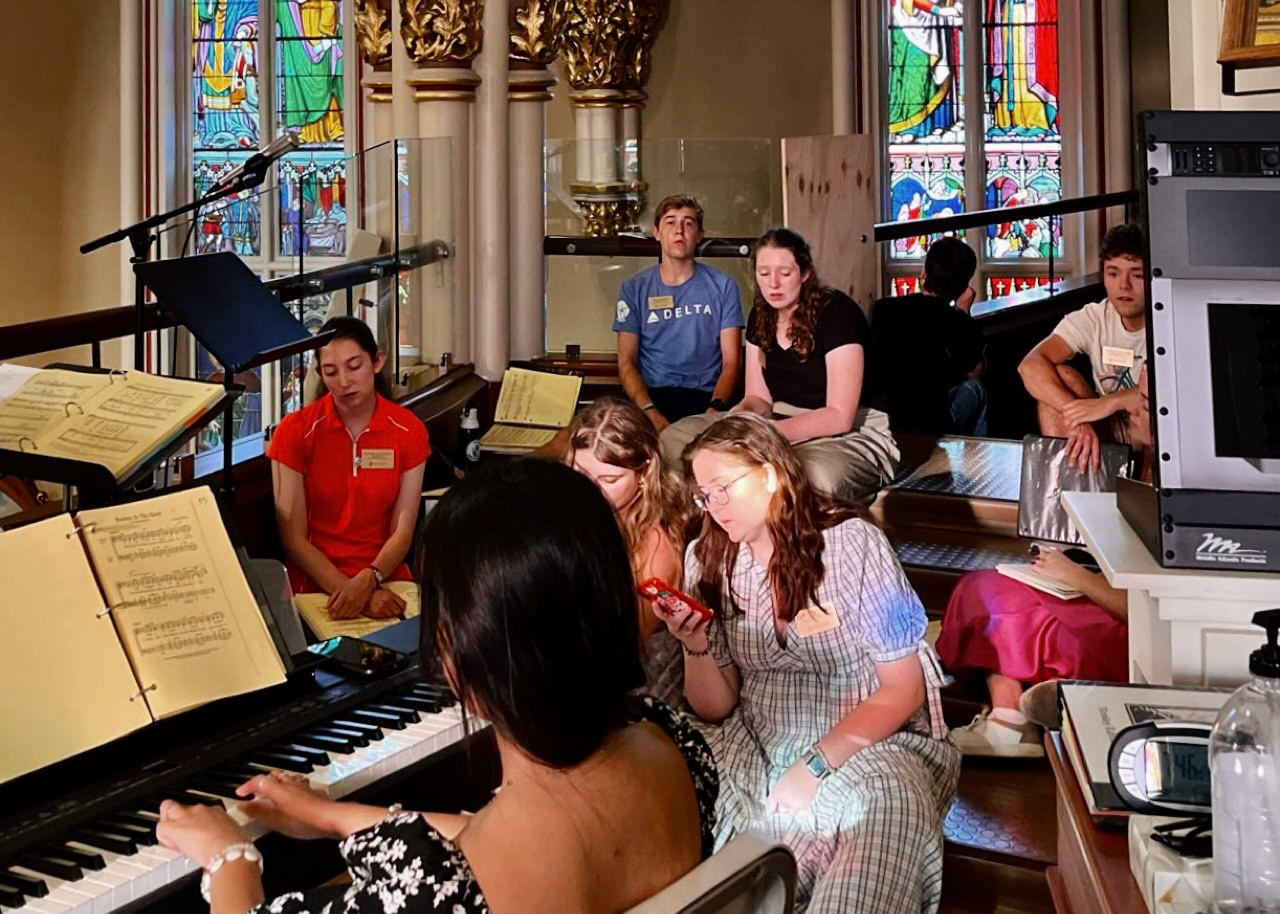
Cover photo: The two of us (Sofia: at the piano, Thomas: back right) singing for the reconciliation service at Notre Dame Vision 2023, in the Basilica of the Sacred Heart. The stained glass window of Saint Cecilia, patroness of music, can be seen behind Thomas.
I'M HOME!
The wound’s ripped open
I’m bleeding out
And it’s by my own hand
Love can’t reach me
I’m sick in my own sin
I fail and fail again
Set me free, wash me clean
Give me the strength I need to fight these lies
I’m at your feet, down on my knees
It’s here where I can see, no longer blind
Father, forgive me
I have sinned
Bless me, oh Father
Will you call me Your son?
Against heaven, against truth
I’m not worthy of You
[instrumental interlude]
I’m coming home
My sin is no more
The table’s set, the promise met in me
What once was lost
Found in His arms
Father, Father, I’m home
[instrumental outro]
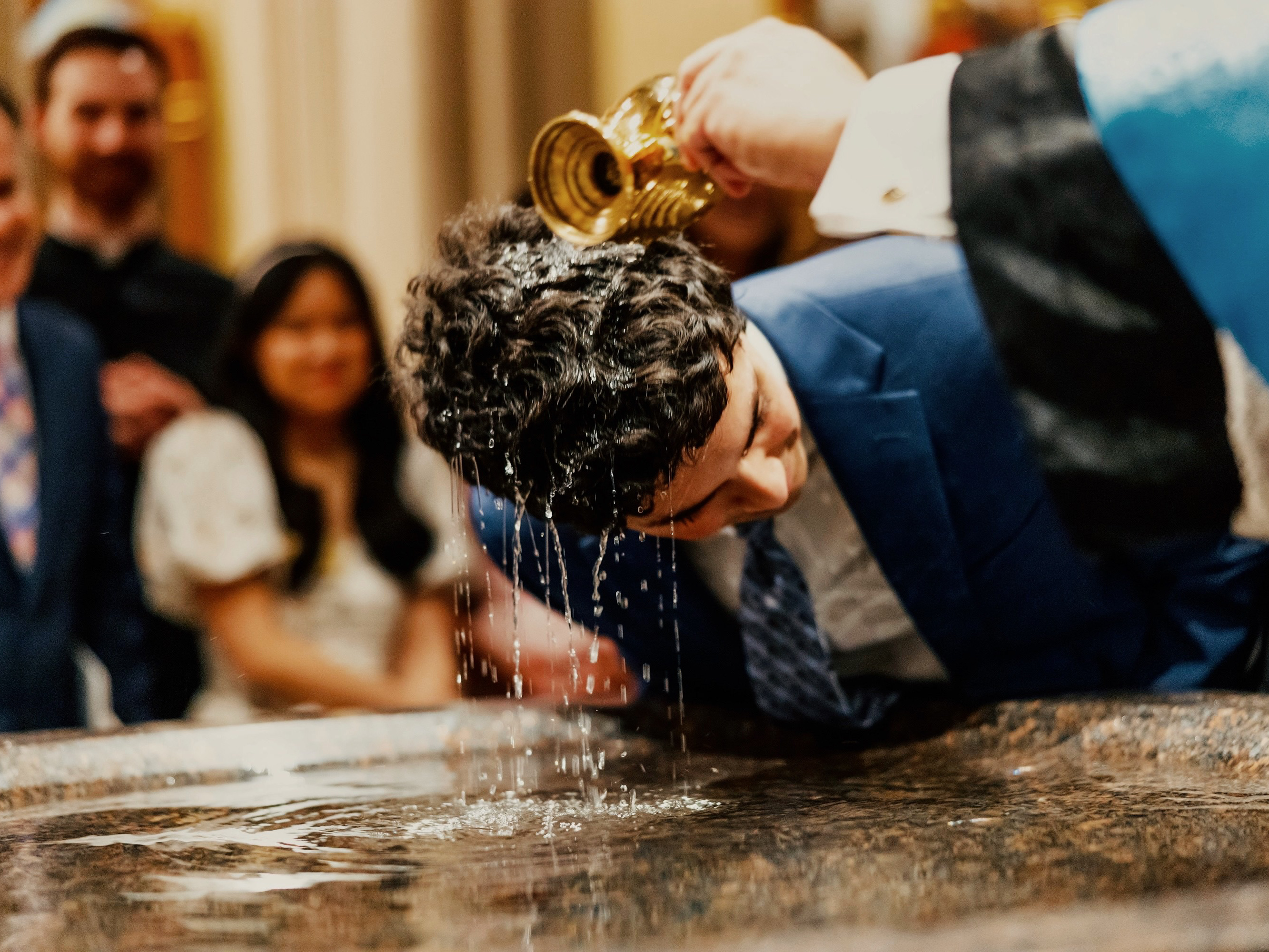
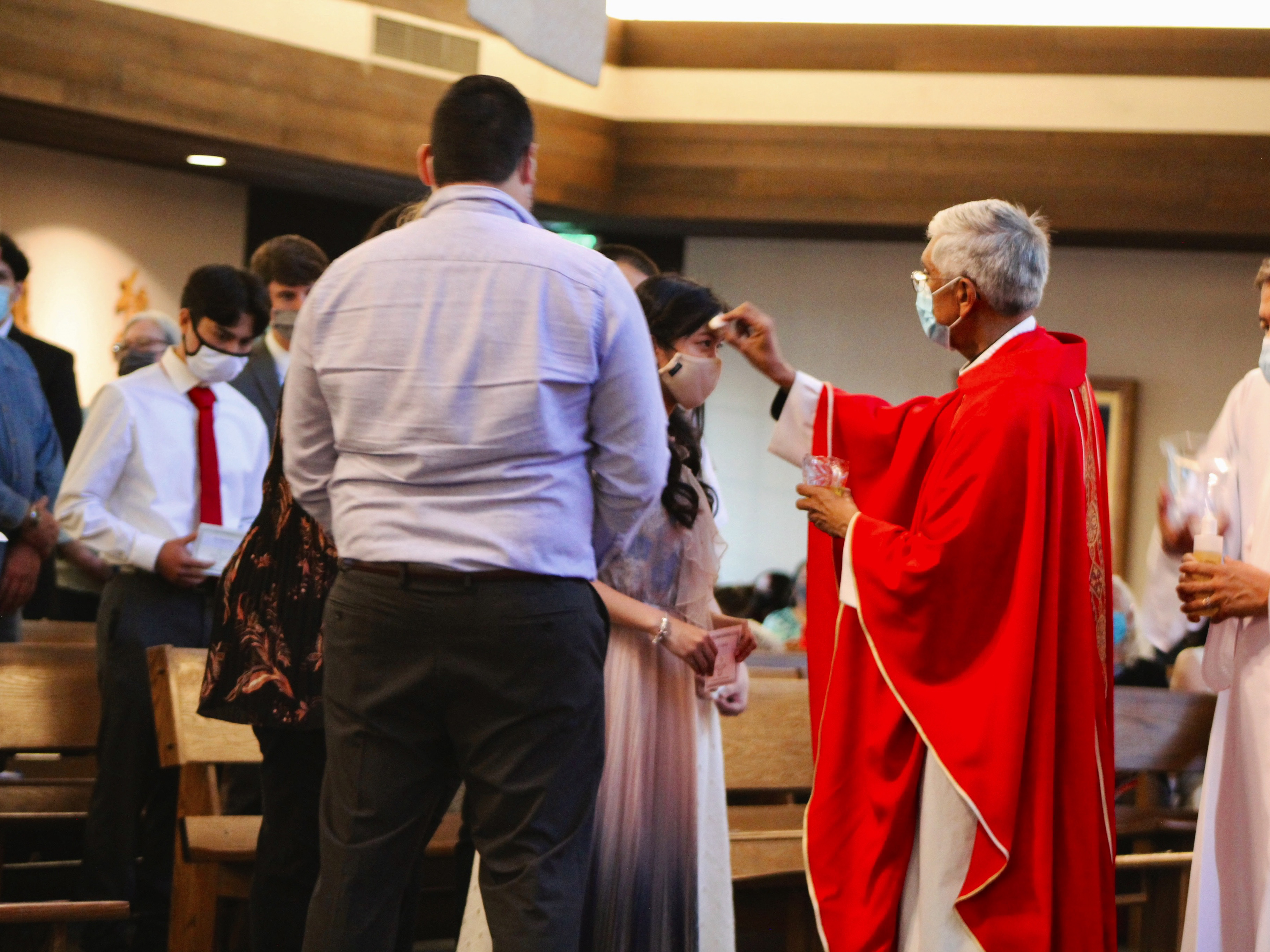
In the sacrament of Confession, a penitent confesses their sins to a priest. They are bestowed with absolution and forgiveness through the ministry of the Church, which reconciles them with God and the Christian community.
Both of us agree that "I'm Home!" was the hardest and the most uncomfortable to write. It is also one of the most moving on the album. The instrumental piano came first as it laid down the structure of the song, which ended up being written in a narrative style typical of a musical theater ballad, as the lyrics and movements were adapted to fit Adrienne von Speyr’s model of confession. “I’m Home!” was the only song in which we utilized the instrumental more than lyrics to sonically express the theology and the steps of the sacrament. The song tells a story, like the sacrament does, of a person’s individual life and relationship with their sin and its absolution. Listen to how the music itself, not just the lyrics, is a prayer.
- The first verse demonstrates preparation and contrition: recognizing the filth of one's own sin and then sitting with it. Verse two represents resolution: someone seeking the sacrament with an earnest prayer and plea to God. The third verse dictates the experience of the sacrament in the confessional: confession, with words used directly from the rite. The instrumental interlude represents the sweeping exhortation that the priest offers to each penitent. The transition into verse four from the interlude literally resolves, like the step of absolution it represents, with the outro finishing von Speyr's last step of living free after completing penance.
- The piano line begins with haunting and trudging i-V-VI-V chord progression that rhythmically matches the monotony of habitual sin. This simple, wearied rhythm will continue until verse three, when the singer begins making their confession, growing in discordance to match the distortion of sin. From the interlude on, hope is audible; the outro is like quietly falling, sweet-smelling rain, and flows perfectly into "Communion."
- The two of us struggled to choose a title for this piece. We did not know whether to lean into the darkness of the song or the bright, and we originally settled on a dimmer title, “Wounds.” We kept this title for almost a year, but only when we were recording did we realize that the main character of the song is not the pervasiveness of sin, but rather the promise and experience of communion that the sacrament points toward—literally as the chords resolve to communion, but also in the title that we settled on: “I’m Home!”
What was the most striking part of the song?