Creativity is holy.
God therefore called man into existence, committing to him the craftsman's task. Through his “artistic creativity” man appears more than ever “in the image of God”, and he accomplishes this task above all in shaping the wondrous “material” of his own humanity and then exercising creative dominion over the universe which surrounds him. With loving regard, the divine Artist passes on to the human artist a spark of his own surpassing wisdom, calling him to share in his creative power. —Letter to Artists, 1.
When God created humans in his image and likeness, and gave us stewardship over all creation, he gave us a share in his creative office. While we can't Create out of nothing like God does, we are called to create (craft, fashion out of parts) newness—innovation, art, relationship, community—using what he Created in the very beginning. God gave us a share in his holy wisdom, the modus operandi of Creation and the “wellspring” of Created life. This gift requires a response: co-creating!
Artists have a particular vocation as creators to co-create with one another and with the Holy Spirit. When artists create, they encounter three sacramental realities firsthand:
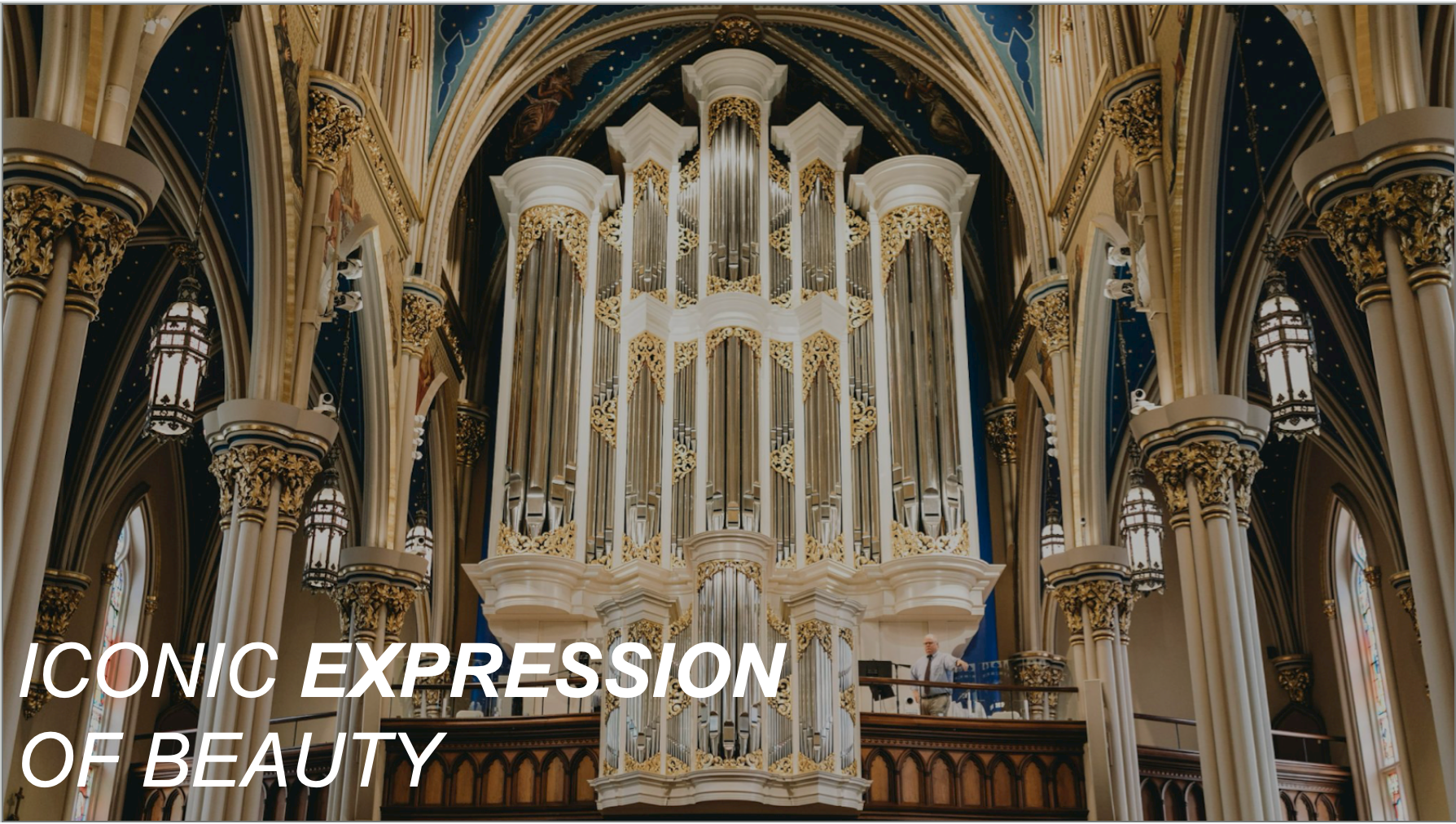
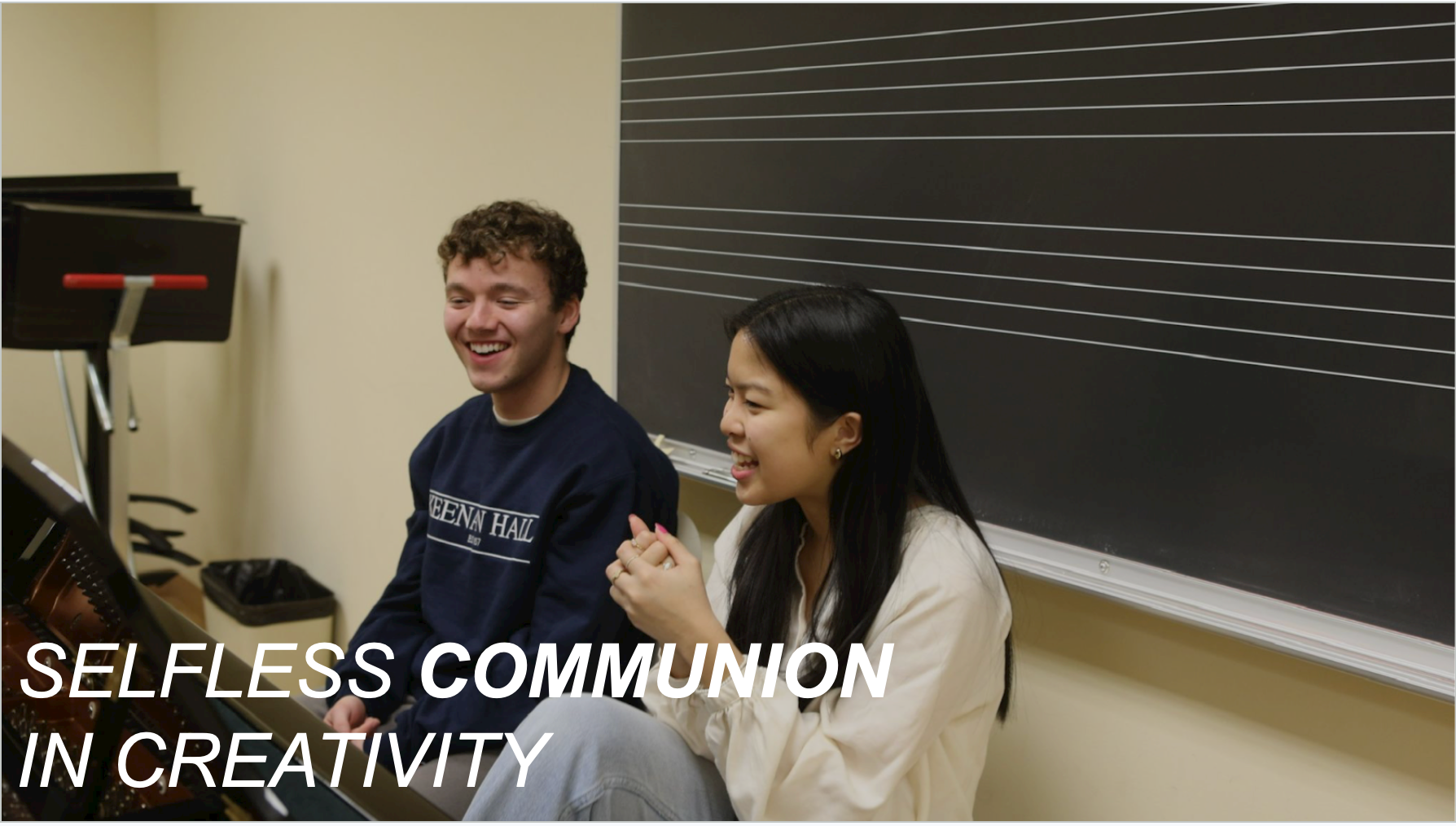
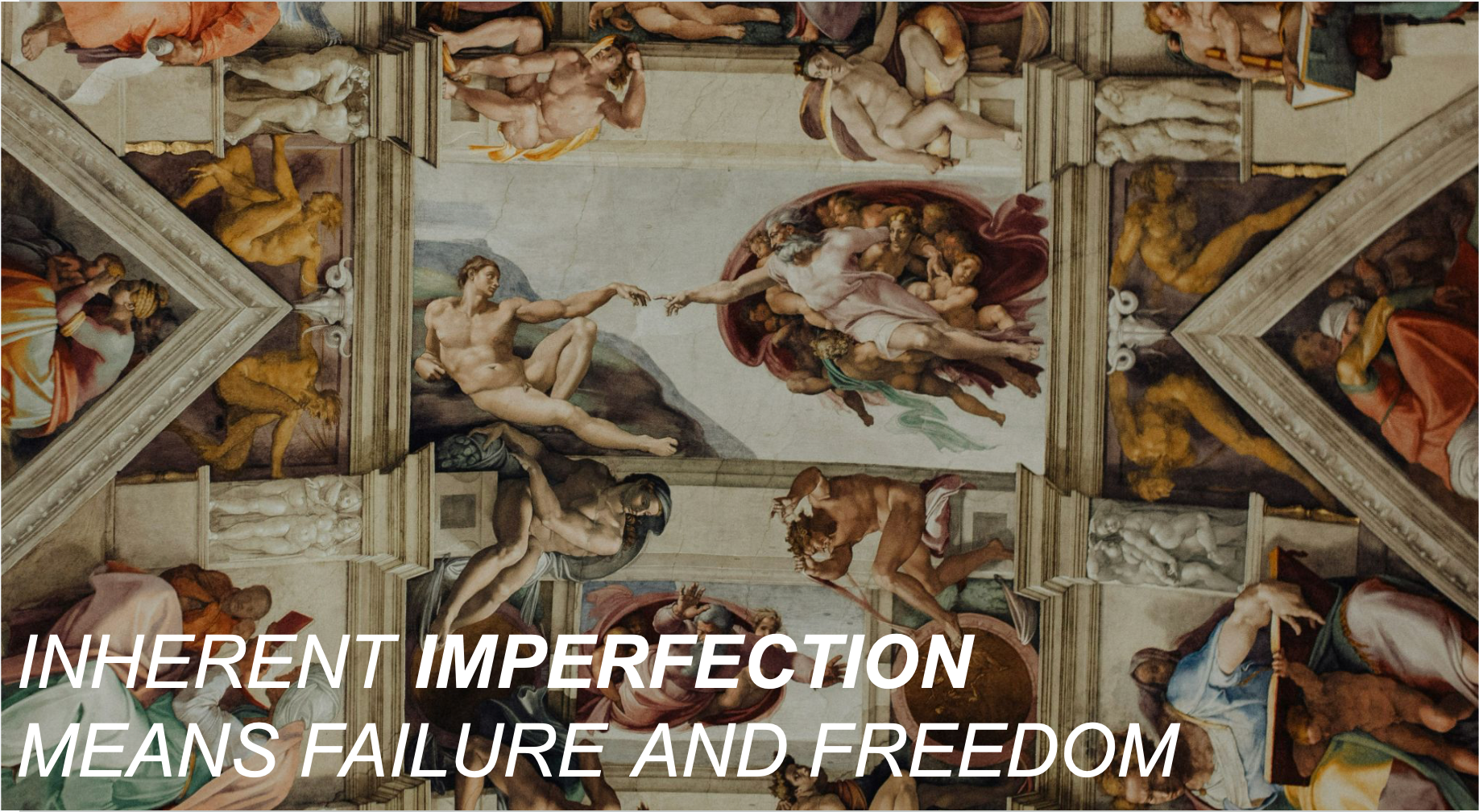
In short, like in the sacramental economy, we encounter the simple made divine in beauty, as God (who is Beauty Himself) is made present in the art we create; we encounter one another in communion, where it is only in togetherness that joy and loss, grace and brokenness can be shared; and we encounter our own humanity, which is inherently imperfect.
The sacraments provide a helpful medium for understanding the relationship between divine and human creativity because in both, creation is glorified from within; there is no such thing as a private sacrament, or private art; and because of our creatureliness, God comes to be with us—for real.
And, Louis-Marie Chauvet's sacramental framework maps on perfectly to our creative office:
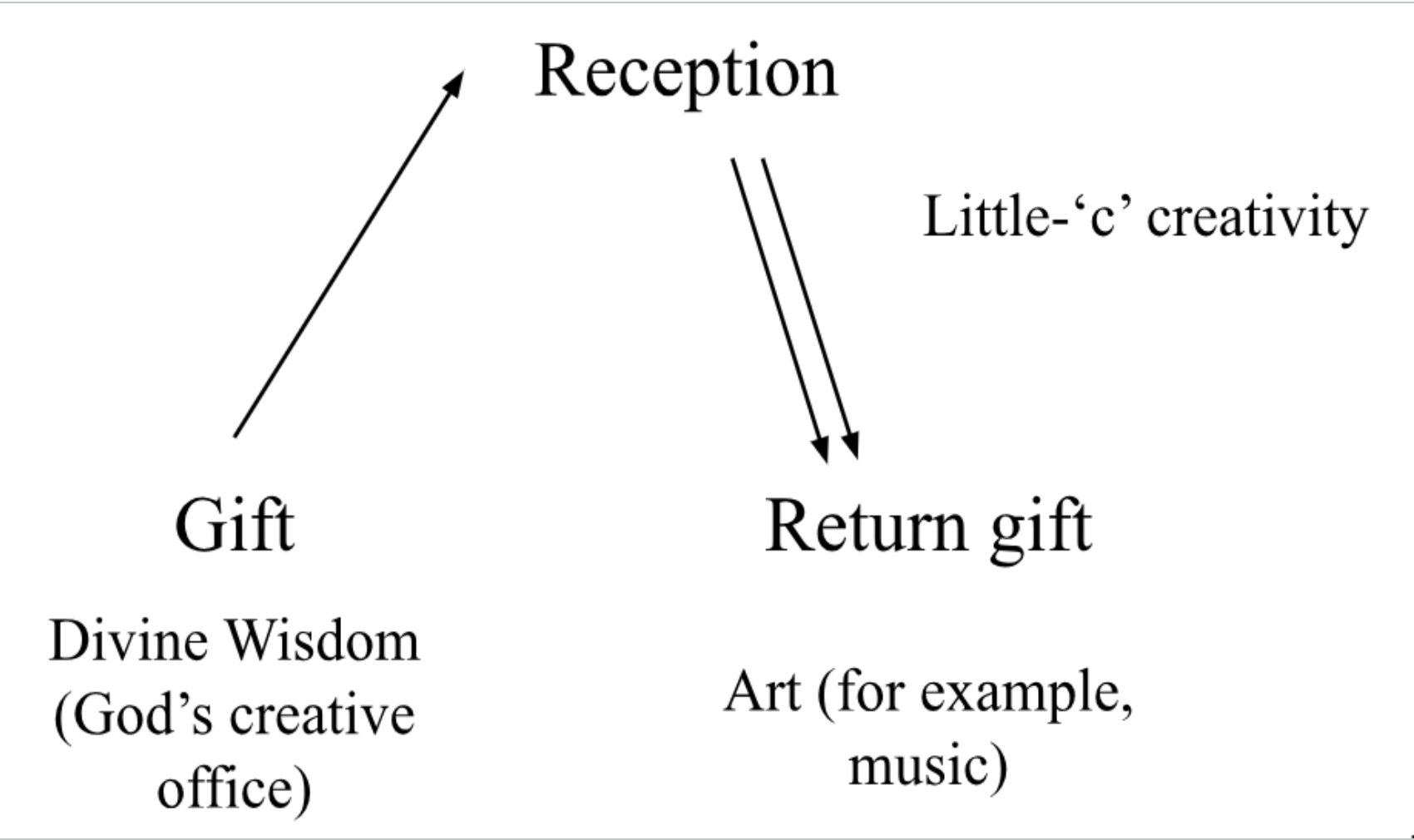
When artists co-create with the Holy Spirit—when musicians make music with God, as we do—we experience a pivotal shift from instrumentality to intimacy. Creativity becomes a ritual act of prayer that engages the whole person and brings them into communion with God to reveal who he is and be transformed by him in the process.
Sounds like the sacraments, doesn't it?
Still... you have to wade in the weeds.
Co-creating with the Holy Spirit seemed easy when we were free in chapels and echoey music rooms. Actually recording an album—actually making the thing—has immersed us in the actual experience of creative theology we have been theorizing. Taking our creativity to the studio meant every imperfection of our music was put under a microscope in production. It was in the recording process that we encountered most tangibly the fallibility that is inherent in human creativity: we spent hours agonizing over whether we had pronounced a certain syllable clearly enough, whether we had synced our words in time, whether we were perfectly on pitch or if we could do it better. “Let’s do it again, I can do it better than that” was a penchant that plagued us as we tried to make our record as perfect as possible. But, we were necessarily bound by time and ability, and frustrated, we were forced to surrender our best work to our audio engineer by the deadline. His job was to polish the tracks and make them fitting (“perfect”) for streaming.
What came back from our engineer surprised us: the first demos we received back sounded too perfect. We realized that our understanding of the larger aim of 'For Eden' as an attempt to understand sacramentality and the sacraments in song necessitates imperfections: the slight wavering of vibrato, the gasp of breathing, the very sounds of breath and life that make our music human. It has been our endeavor to make our album as authentic and prayerful as possible. In order to bring 'For Eden' to its telos, we had to surrender to our humanity and let God—not ourselves—infuse our songs with his grace.
The songwriting and recording process has shown the both of us that God has a wonderful way of working through the ordinary, that a communal and creative process can bear the fruits of sacramentality. God literally worked through the logistics of the recording process and struggling through unfamiliar software. We saw his guiding hand in allowing us to surrender both the labor and the fruit of our creativity to him. Everything is sacramental; everything is theological. Even the failures of our songs ultimately result in beauty brought from the work of human hands, the simple made divine.
'For Eden' is not perfect because God explicitly did not allow it to be. In our striving for perfection, we fall short of heaven until we are returned to Christ Himself. This is what the sacraments are for, this is what liturgy is for, this is what God comes to be with us in the creative process for. Imperfect worship is part of our vocation, as Jesus is the one who perfects our very human praise. This is at once humbling and freeing: “now that you don’t have to be perfect, you can be good.”